
Did You Know?
All about the kidney – an Up fresher on a genius organ and its’ interplay with hypertension
March 16, 2026
March is the Month of World-Kidney Day. Our kidneys are vital homeostatic organs responsible for maintaining the internal chemical stability of the body. They perform several essential functions like, filtration of blood and removal of metabolic waste, regulation of fluid and electrolyte balance, glugenesis, acid–base homeostasis and endocrine function. Our kidneys are also essential for blood pressure (BP) control. Reason enough to have a closer look on that important organ and how it is related to hypertension.
CKD as a huge risk worldwide
Unfortunately, our kidneys can get diseased. It is estimated that 10% of the population worldwide have chronic kidney disease (CKD)1 and many patients with CKD have also hypertension.2
Hypertension and CKD are tightly interconnected disease entities that accelerate one another in a self‑reinforcing cycle. Approximately four out of five patients with CKD have hypertension, illustrating the centrality of elevated blood pressure (BP) in the progression of renal disease. The consequences are severe: CKD and associated cardiovascular (CV) disease were responsible for 4.6% of global deaths in 2017. 3 Understanding this interaction is essential for clinicians aiming to slow renal decline and reduce cardiovascular morbidity.2
Pathophysiological Link Between Hypertension and CKD
Both conditions exacerbate each other:
- Hypertension accelerates CKD progression via mechanical and inflammatory renal injury.
- CKD worsens hypertension via RAAS upregulation, impaired natriuresis, and SNS hyperactivity.
This bidirectional pathology leads to increased cardiovascular risk.4
How Hypertension drives CKD Progression
Uncontrolled hypertension leads to structural and functional damage of renal vasculature, glomeruli, and tubulointerstitial tissue. Chronic elevation of BP increases intraglomerular pressure, causing hyperfiltration injury and progressive glomerulosclerosis. Evidence shows that uncontrolled resistant hypertension markedly increases the risk of developing end‑stage renal disease (ESRD) within five years.4
CKD as a cause of hypertension
As renal function deteriorates, multiple mechanisms contribute to rising blood pressure, including:
- Activation of the renin–angiotensin–aldosterone system (RAAS)
- Sodium and fluid retention
- Heightened sympathetic nervous system (SNS) activity
SNS hyperactivity is particularly well documented in CKD. Damage to renal tissue increases afferent nerve signaling to the brain, which amplifies global sympathetic outflow and worsens hypertension.5
Controlling BP is crucial for slowing the progression of CKD
Lower systolic BP, RAAS blockade, and intensive BP targets all help reduce glomerular pressure, proteinuria, and eGFR decline. Yet about 40% of CKD patients have resistant hypertension due to polypharmacy, adherence challenges, or physiological resistance.4 This highlights the need for simple, durable BP‑lowering therapies, especially non-pharmaceutical but interventional.
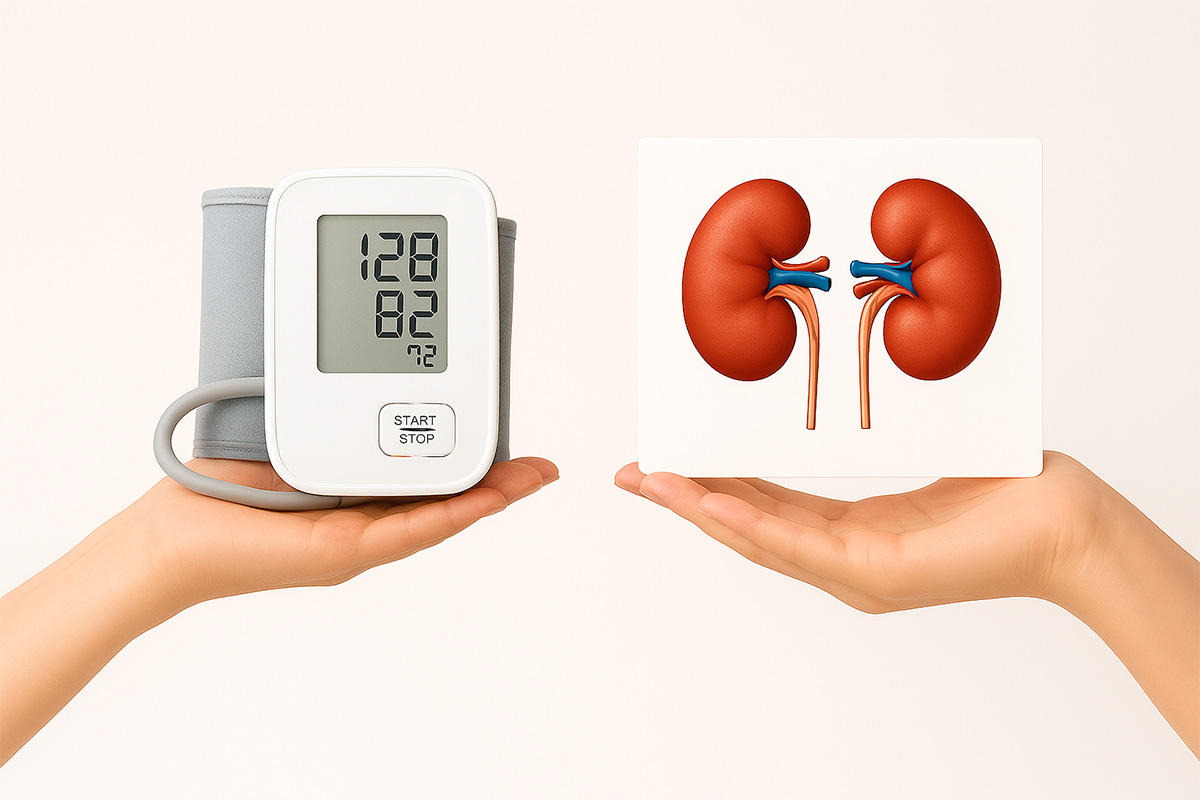
Wrap-up: Protect kidneys to protect blood pressure and vice versa
Kidneys are heroes of our body, which needs to be protected to protect our overall health – not only on World Kidney Day. Hypertension and CKD are pathophysiological intertwined, driving mutual progression through mechanisms involving RAAS activation, sodium retention, and sympathetic hyperactivity. Optimal BP control remains the most effective strategy to delay CKD progression and an interventional, non-drug therapy might be a good strategy, since working 24/7 it reduces adherence problems and the risk of potential new side effects by adding other medication.

References:
- Global Facts: About Kidney Disease | National Kidney Foundation
- Muntner P , Anderson A , Charleston J et al. Hypertension awareness, treatment, and control in adults with CKD: results from the Chronic Renal Insufficiency Cohort (CRIC) study. Am J Kidney Dis, 2010
- Bikbov B, Purcell CA, Levey AS et al. Global, regional, and national burden of chronic kidney disease, 1990–2017: a systematic analysis for the global burden of disease study 2017, Lancet North Am Ed, 2020, 395 709 – 733
- R E Schmieder, Renal denervation in patients with chronic kidney disease: current evidence and future perspectives, Nephrology Dialysis Transplantation, Volume 38, Issue 5, May 2023, Pages 1089–1096, https://doi.org/10.1093/ndt/gfac189
- R E Schmieder, New Frontiers in CKD Therapy: Renal Denervation, accessed Feb 19th 2026
- Veelken R ,Schmieder RE , Renal denervation– implications for chronic kidney disease, Nature reviews. Nephrology, 15 Apr 2014, 10(6):305-313,
- Markus P Schlaich, Renal Denervation in Patients With Moderate to Severe Chronic Kidney Disease, accessed Feb 19th 2026
- Study Details | NCT04264403 | Renal Denervation in Chronic Kidney Disease – RDN-CKD Study | ClinicalTrials.gov, accessed Feb 19th 2026
- Transformation of the Kidney into a Pathological Neuro-Immune-Endocrine Organ | Circulation Research
Important Safety Information
Prescription Only. Brief Summary – Prior to use, please reference the Instructions for Use
Indications for Use
The Paradise™ Ultrasound Renal Denervation System (Paradise™ System) is indicated to reduce blood pressure as an adjunctive treatment in hypertension patients in whom lifestyle modifications and antihypertensive medications do not adequately control blood pressure.
Results may vary. The most common risks include pain, vascular site injury and vasospasm. See full important safety information: https://www.recormedical.eu/paradise-ultrasound-rdn-system/#safety
December 10, 2025
Winter may feel cozy, but it’s also peak time for strokes – and mornings and Mondays aren’t far behind. Research shows that blood pressure spikes, holiday habits, and stress can all play a role.
September 22, 2025
A new clinical trial reveals that something as simple as arm position can skew blood pressure readings by up to 6.5 mm Hg — enough to misdiagnose hypertension or trigger unnecessary treatment. Find out what the study uncovered and why proper technique matters more than ever.
June 26, 2025
Back in March, we saw the publication of our second health economic analysis of the cost-effectiveness of Ultrasound Renal Denervation (uRDN) for the treatment of resistant hypertensive patients.